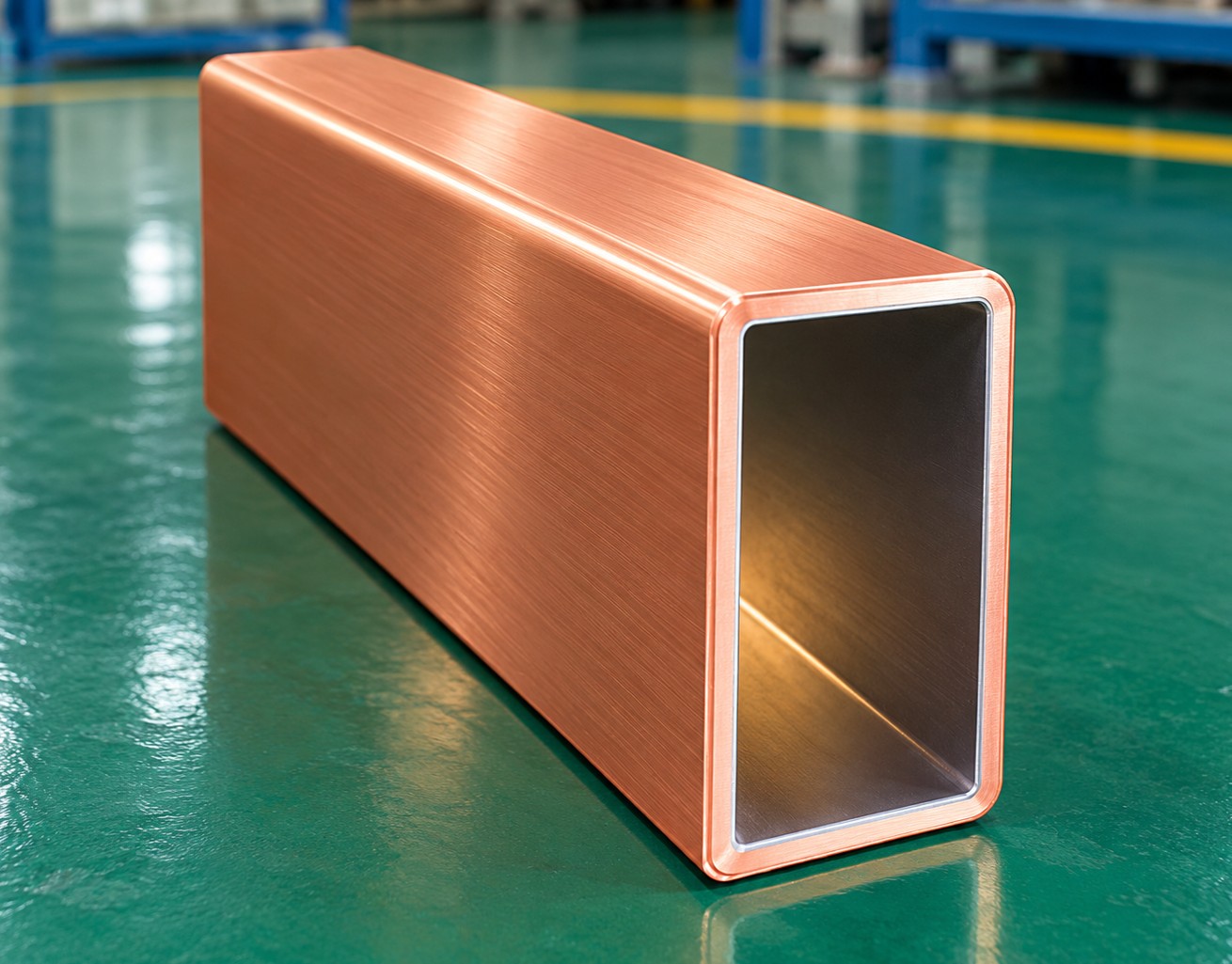

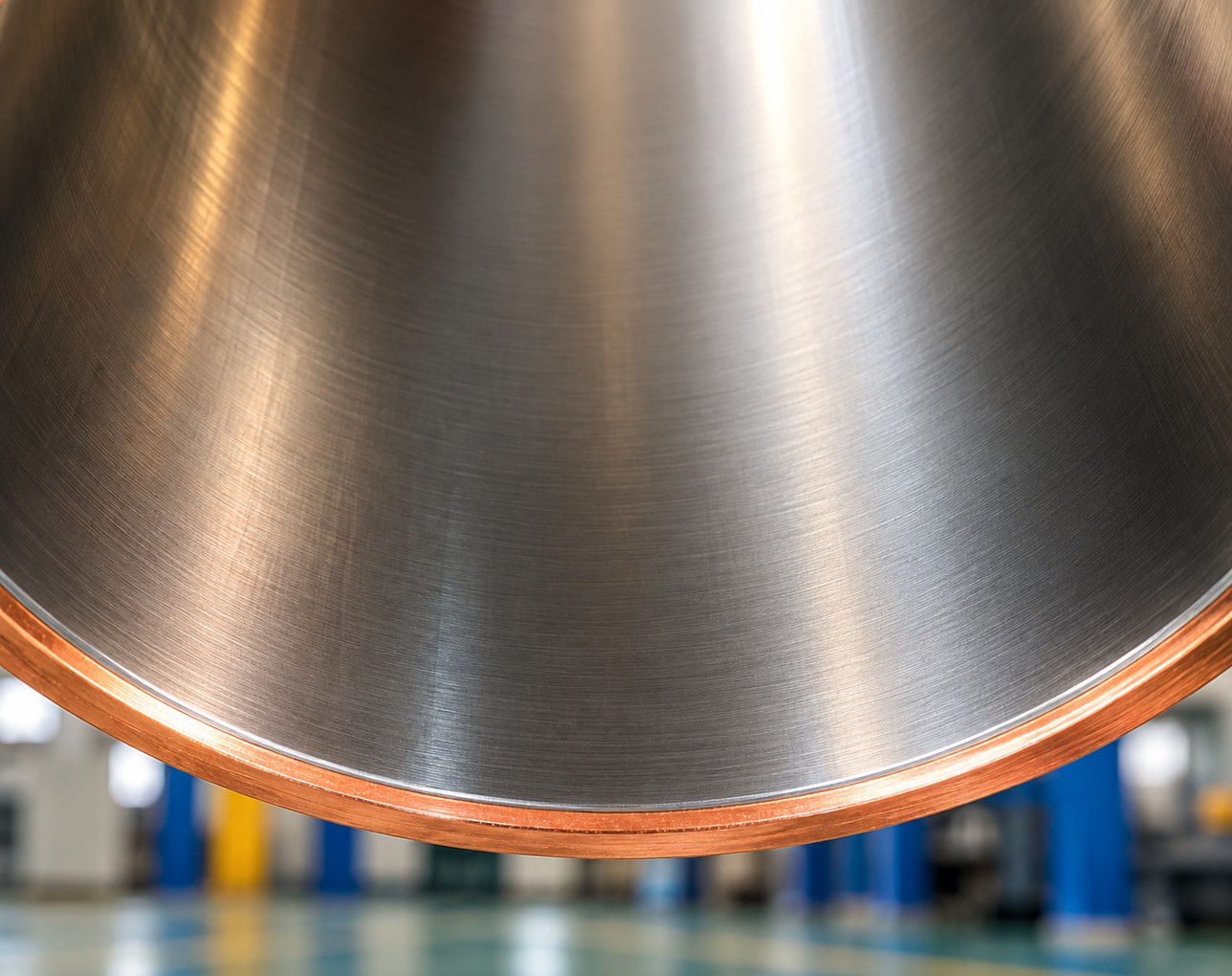
Bare copper against sliding steel at 1500 °C would last hours. The hard chrome layer on the bore of a mould tube is what makes a campaign of weeks possible. It is thin, typically 0.1 mm, and it is the part of the tube that wears out first.
Our standard layer is 80–120 µm of electrodeposited hard chrome. Published supplier specifications range from 0.06 mm to about 0.20 mm; thinner layers are cheaper and fine for slow casters, thicker layers last longer but are more prone to cracking under thermal cycling if the deposit is not well controlled. Thickness is measured with an eddy-current or XRF gauge at six or more points; the meniscus zone and the exit corners are the critical ones.
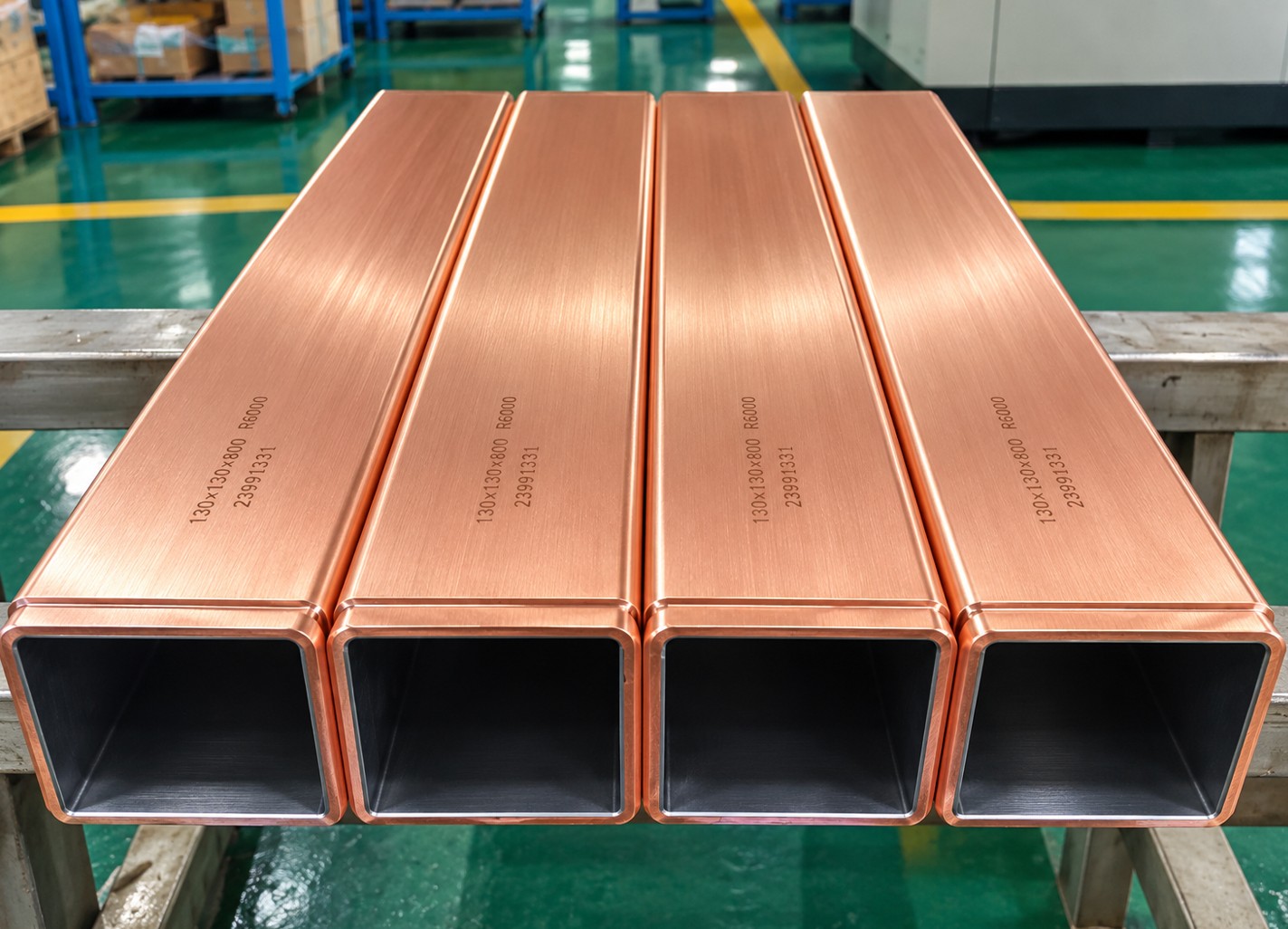
A nickel underlayer of 0.1–0.5 mm beneath the chrome improves adhesion, bridges the difference in thermal expansion between copper and chrome, and can be applied thicker in the lower part of the tube where wear is highest. Ni-Cr costs more and is worth it on high-speed casters and on tubes that will be re-plated several times. For standard billet casting, plain hard chrome is the economical choice.
Wear is concentrated at the exit end and in the corners, where the shell is strongest and the taper pushes it against the copper. Typical failure modes: gradual thinning at the exit, flaking near the meniscus after thermal cracking, scoring from a sticker, and pitting under a corroded spot. Poor water quality and cooling stoppages accelerate all of them.
Tube life in a well-run plant ends for one of two reasons: the chrome is worn through, or the taper has opened. If chrome wears out while the taper is still good, the tube can be stripped, polished and re-plated; if the taper is gone the tube needs re-machining first, which consumes wall. Matching plating thickness to the expected campaign length avoids scrapping a tube with good copper because the chrome was too thin, or paying for chrome you never use.
State the coating (hard chrome or Ni-Cr), the thickness range, and whether you need a plating certificate. If you send an OEM drawing, the plating note on it is enough.
Only if the deposit is poorly adhered or the copper underneath has softened; both are supplier problems, not inherent to chrome.
Hexavalent chrome plating is regulated in the EU; our plating line operates under Chinese environmental permits, and the finished tube contains only metallic chrome.
Usually two to three, limited by the wall allowance for re-machining, not by the plating.
Related pages: Copper Mould Tubes · Technical data: plating · Repair and re-plating · Tube life · Request a quote