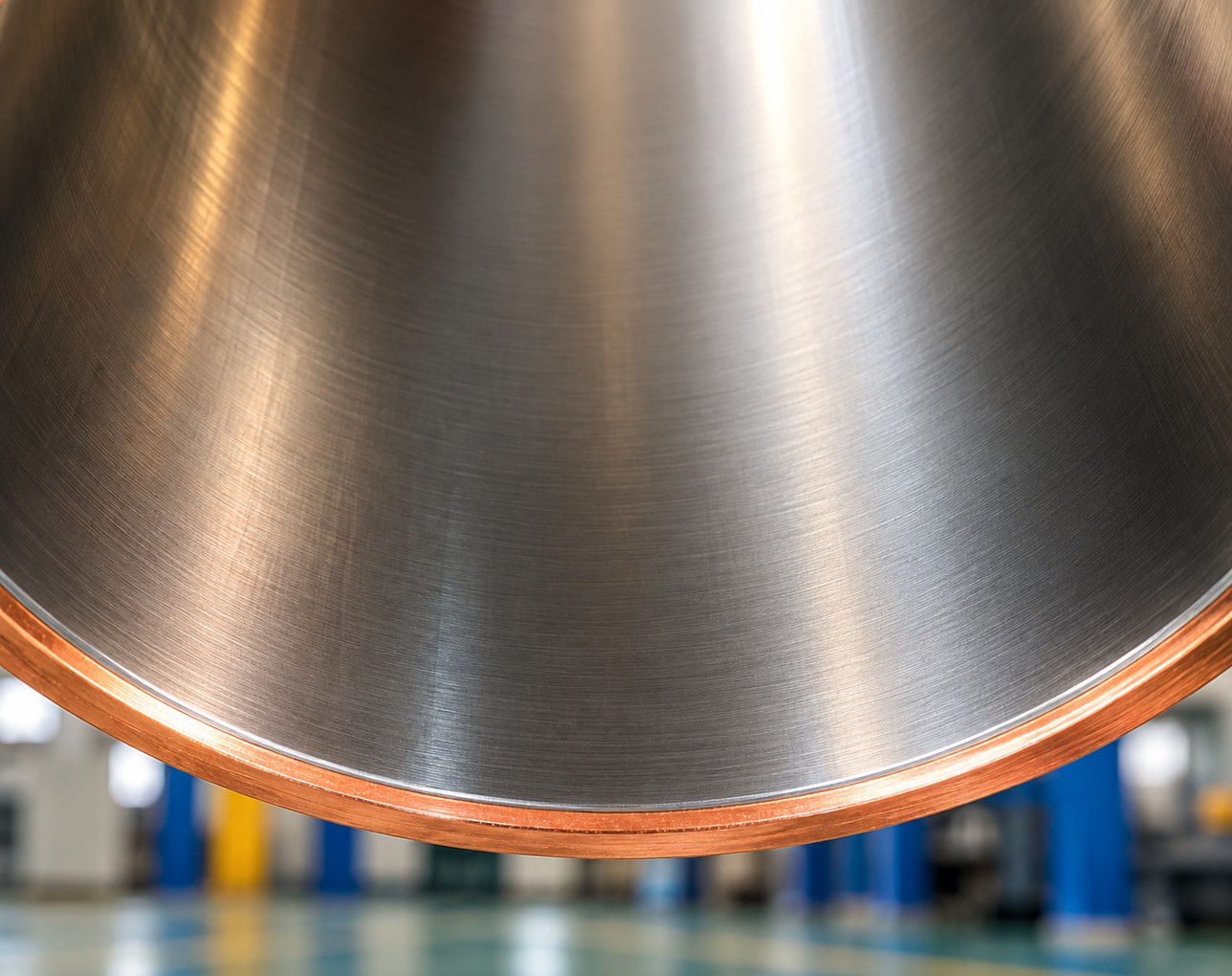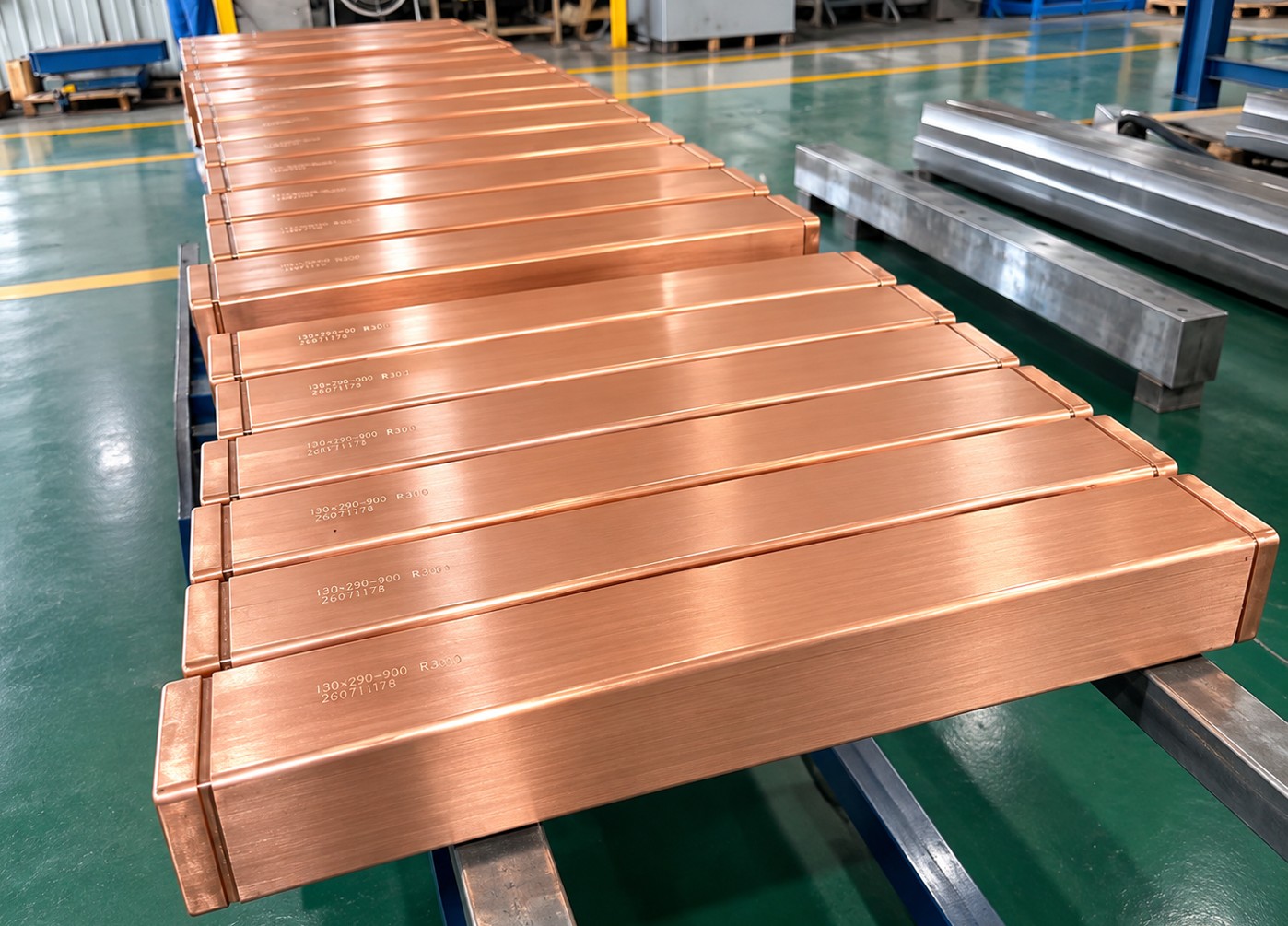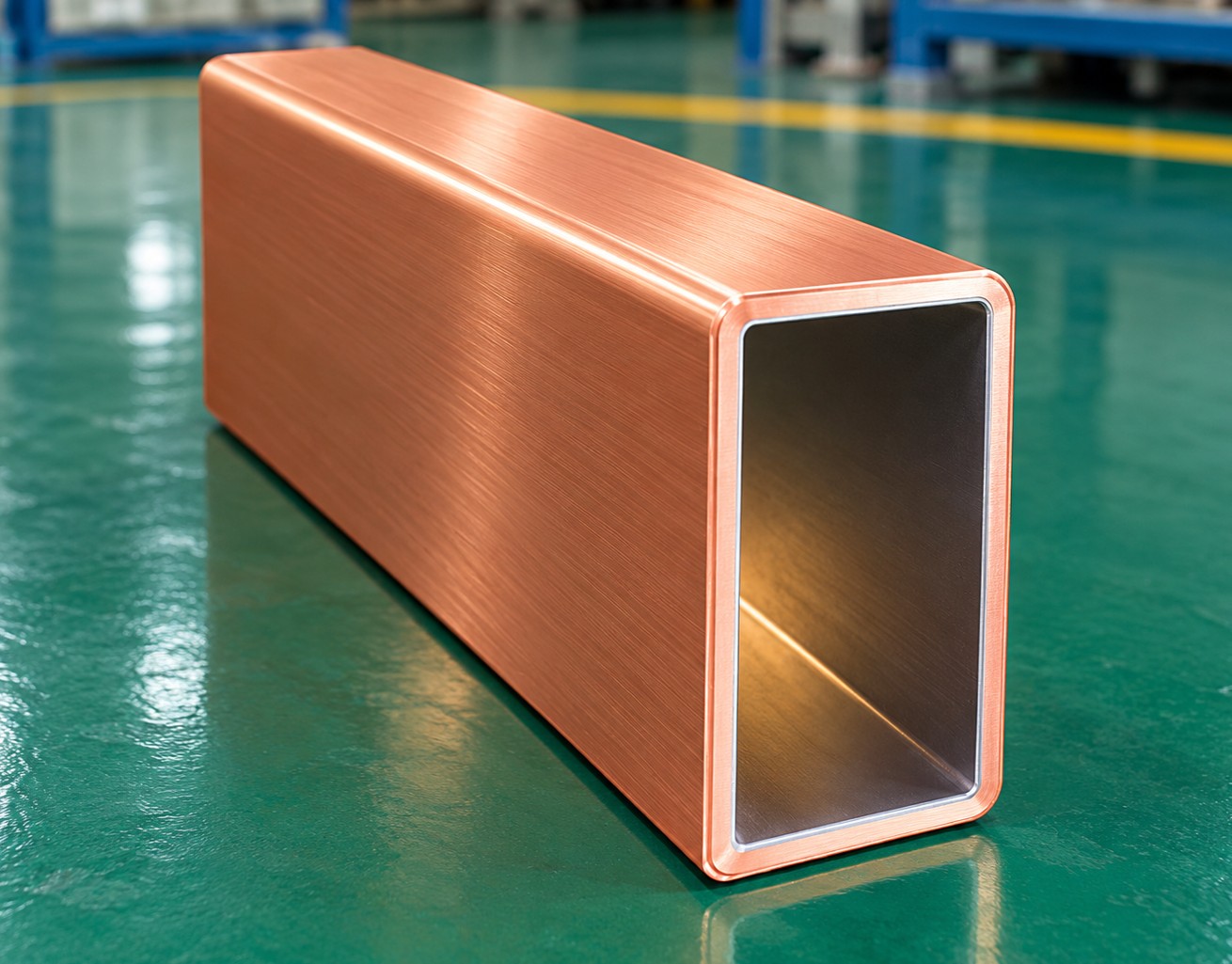

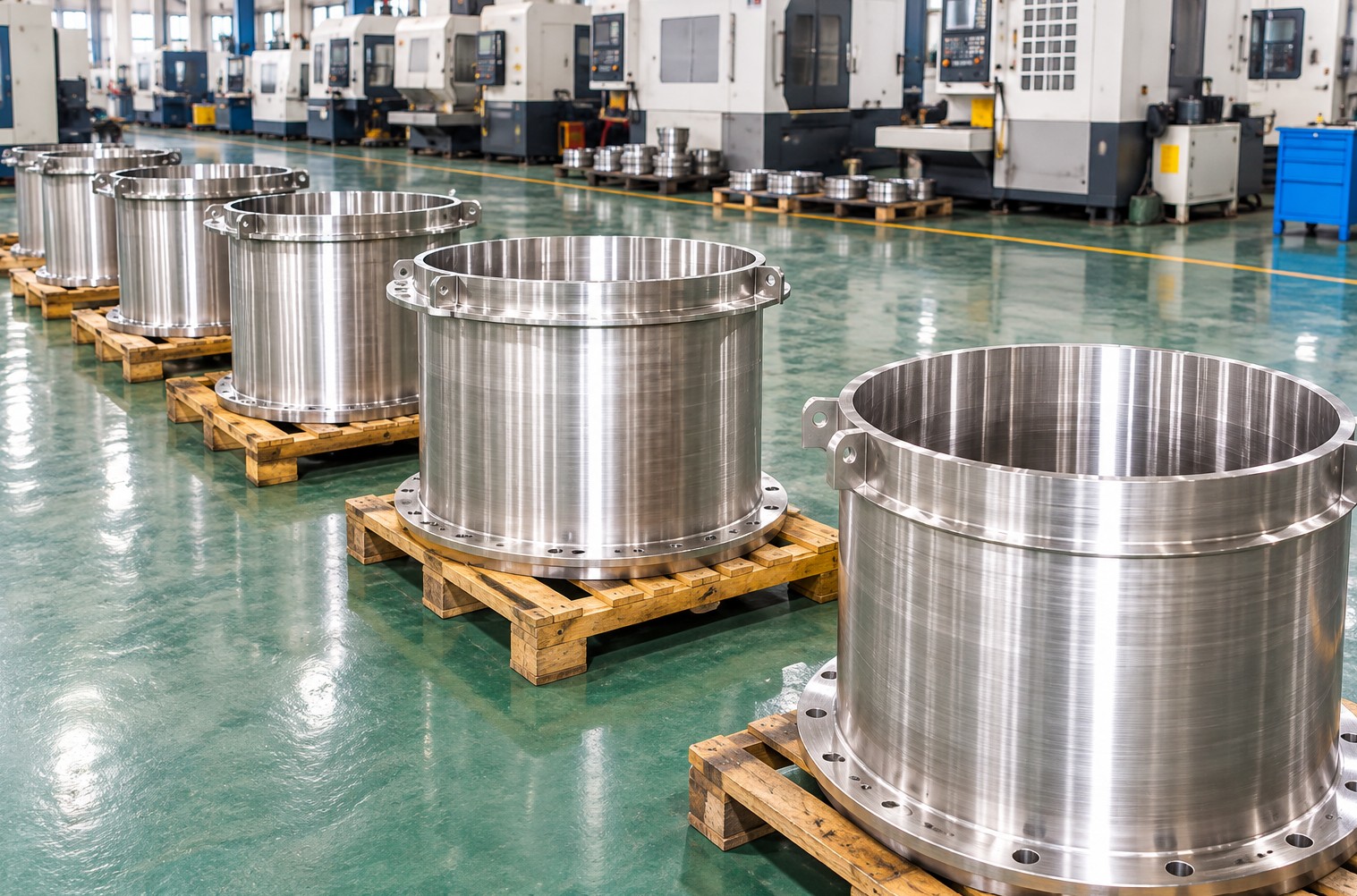
The copper mould tube transfers heat; the water jacket around it decides how much and how evenly. A new tube in a worn or mismatched jacket cools unevenly, and the result, rhomboidity, corner cracks and short tube life, gets blamed on the tube. This article is about the other half of the mould.
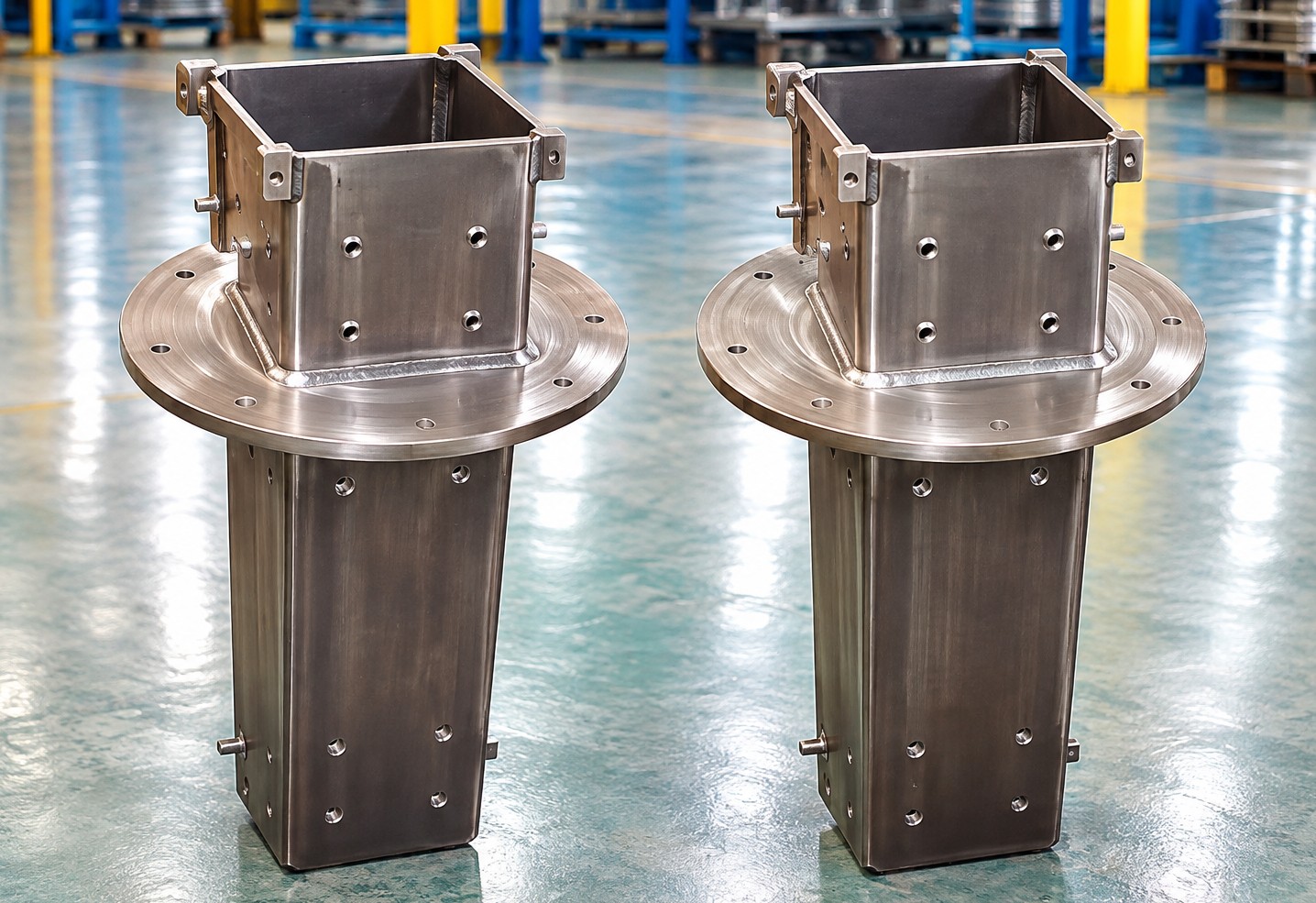
A billet mould water jacket is a stainless steel (sometimes carbon steel) box that surrounds the tube and forms a closed water passage between its inner wall and the tube's outer surface. Its parts:
The annular gap between tube and jacket (or baffle) is typically 3–5 mm. It is small on purpose: for a given flow, a narrow gap gives high water velocity, and velocity is what prevents local boiling on the copper surface. If the gap is uneven, because the jacket is distorted, the baffle is worn or the tube is not centred, one face of the tube runs hotter than the others and the billet comes out rhomboid.
| Parameter | Typical |
|---|---|
| Water velocity in the gap | 6–12 m/s |
| Flow, billet mould | ≈ 80–150 m³/h depending on section |
| Inlet temperature | ≤ 40 °C |
| Temperature rise across the mould | 5–10 °C |
| Pressure at the mould | 0.6–1.0 MPa |
| Water quality | Closed circuit, treated, low hardness; scale is the enemy |
These belong to the caster design and are not something we set; the jacket and tube we manufacture must simply reproduce the geometry that achieves them.
Tube outer dimensions, length, flange seats, seal grooves and any water slots are all referenced to the jacket. A tube built to an OEM drawing fits an OEM jacket; a tube built to a worn jacket's measurements fits that jacket and nothing else. The most common cooling faults we see on inspection are a jacket baffle worn oval, a flange face no longer flat, and a jacket from one OEM paired with a tube from another. All three are invisible until the billets go rhomboid.
Leaks at the flange seals let water into the housing and air into the gap; both reduce cooling. Seals are consumables and should be renewed at every tube change. If the flange face is pitted or the seal groove worn, the jacket needs re-machining, which we do together with a pressure test.
We manufacture the copper mould tube and the matching water jacket from the same drawing set, and we can supply both with flanges, seals and connections as a complete mould assembly. If you are replacing only the tube, send a photo of the jacket's inside and its inlet/outlet so we can check compatibility.
Usually yes, if the jacket is undamaged. Have it measured at each tube change; we can do it when you send tubes for repair.
Normally 304 stainless steel; carbon steel or other grades to your drawing.
Every jacket and assembly is leak tested before shipment.
Related pages: Mould water jacket · Copper mould assembly · Copper Mould Tubes · Technical data: cooling · Request a quote