How Long Does a Copper Mould Tube Last in Continuous Casting?
MaintenancePublished 15 October 20263 min read31 views
"How many heats?" is the first question in almost every inquiry. We understand why, and we will not answer it with one number, because the same tube can last 300 heats in one plant and 1500 in another. What we can do is list what decides the difference, and how to tell when a tube is at the end.
What decides copper mould tube life
Copper grade. Cu-DHP softens first; CuAg holds taper roughly 30–50 % longer at high speed; CuCrZr longer again.
Casting speed. Faster casting means higher heat flux and copper temperature. Life falls steeply above the speed the tube was designed for.
Steel grade. Peritectic and high-carbon grades are harder on the tube than plain low-carbon.
Billet section. Small sections run faster and wear the corners harder.
Cooling water quality. Scale on the outside of the tube is an insulator; 0.5 mm of scale can double the copper temperature.
Water flow and velocity. Below about 6 m/s along the tube wall, local boiling starts and the copper overheats.
Taper. A taper matched to the speed wears evenly; a mismatched one wears the corners or the exit.
Chrome thickness. Thicker plating lasts longer, up to the point where the taper opens.
Surface wear from mould powder. Aggressive powders and poor lubrication abrade the chrome.
Operating temperature and thermal cycling. Frequent stops and starts crack the chrome.
Maintenance. Alignment, oscillation stroke, mould level control and regular bore measurement.
Typical ranges
With those caveats: billet tubes in well-run plants typically cast 8,000–20,000 tonnes before re-machining or replacement, i.e. several hundred to over a thousand heats. Plants with hard water, high speed and Cu-DHP see the low end; plants with good water treatment, CuAg or CuCrZr and taper control see the high end. Tube life is a plant performance indicator as much as a product property.
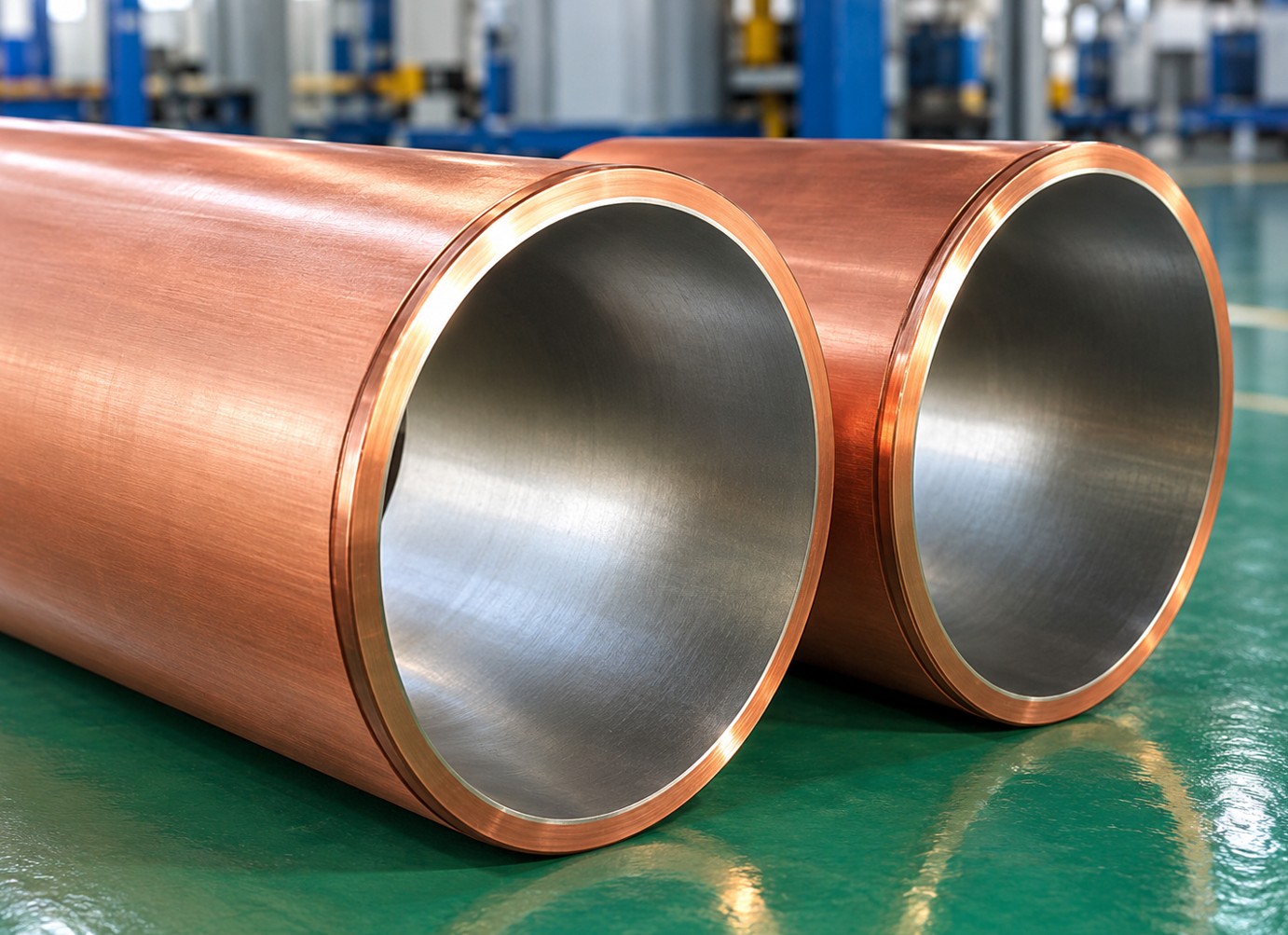
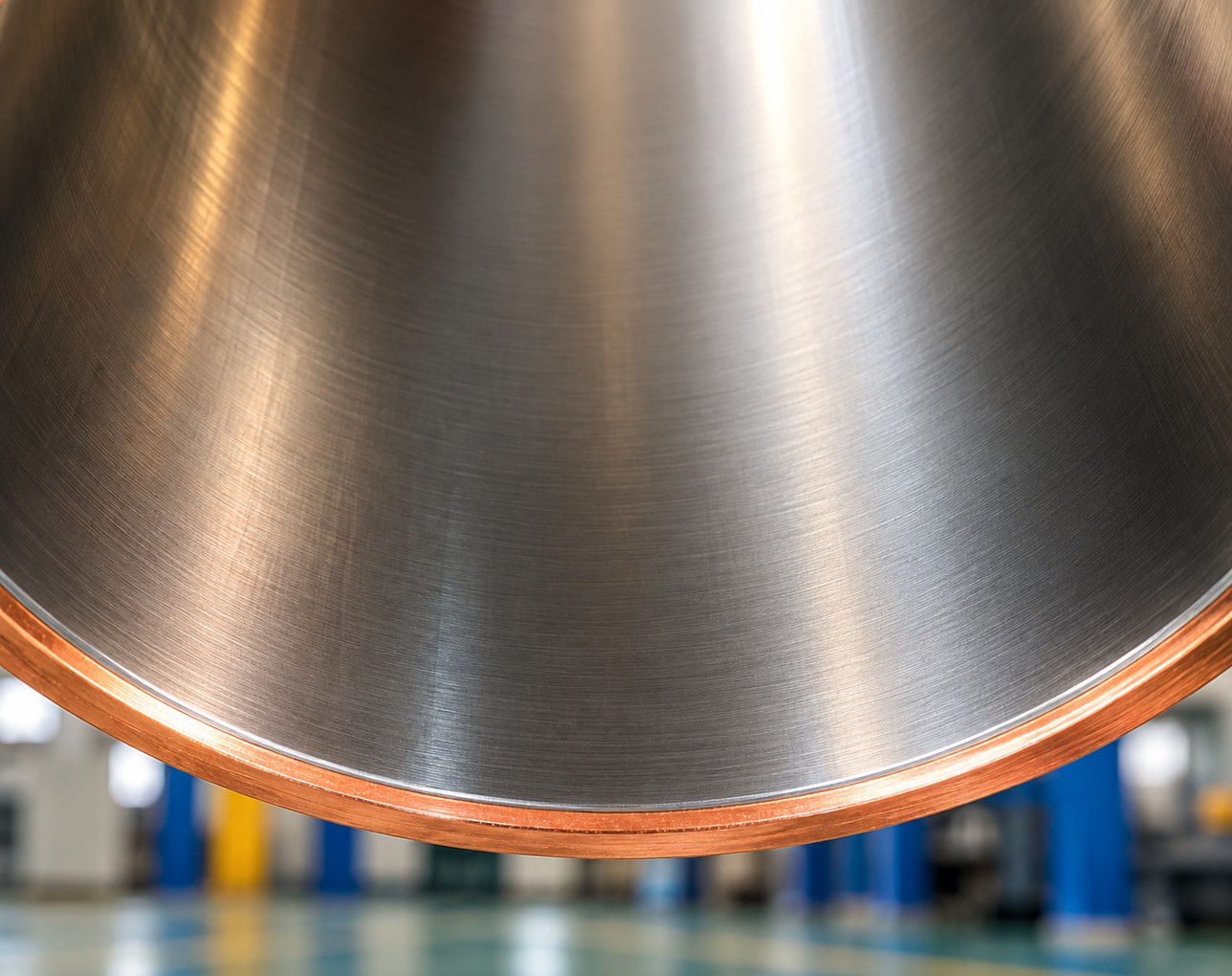
A tube at the start of its life. The heat count it reaches depends as much on the caster as on the tube.
Signs that a copper mould tube needs replacement
Excessive wear at the exit end: measured exit section grown by more than about 0.3 mm.
Taper deviation: CMM or bore-gauge readings no longer match the drawing profile.
Chrome damage: copper visible through the plating, especially at the exit corners.
Cracks: thermal cracks in the chrome near the meniscus, or cracks in the copper.
Deformation: bulging of a face, rhomboid bore, or a change in the casting radius.
Internal surface defects: scoring, pitting, sticker marks that cannot be polished out.
Any one of these is reason to take the tube out. Rhomboid billets, off-corner cracks and an increase in breakouts are the same signs seen from the product side.
Repair or new tube?
If the chrome is worn but the copper is sound and the wall has allowance, the tube can be re-machined and re-plated for a fraction of the new price. If the taper is gone and the wall is at its minimum, or the copper has softened, replace it. We cover the decision in Repair or Replace?.
Frequently asked questions
Do you guarantee a number of heats?
No supplier honestly can. We guarantee the tube meets the drawing and the material specification, and we help you get the most out of it.
How often should the bore be measured?
At every tube change, and ideally at a fixed tonnage interval, so you can see the wear trend.
Does re-plating restore the original life?
Close to it, if the taper was re-machined at the same time; re-plating a worn taper only lasts until the chrome wears off the still-wrong profile.
Have a worn tube? Send photos of the inner surface, the tube marking and the measured exit section — we will tell you whether it can be re-machined and re-plated, and at what cost.Send photos for evaluation