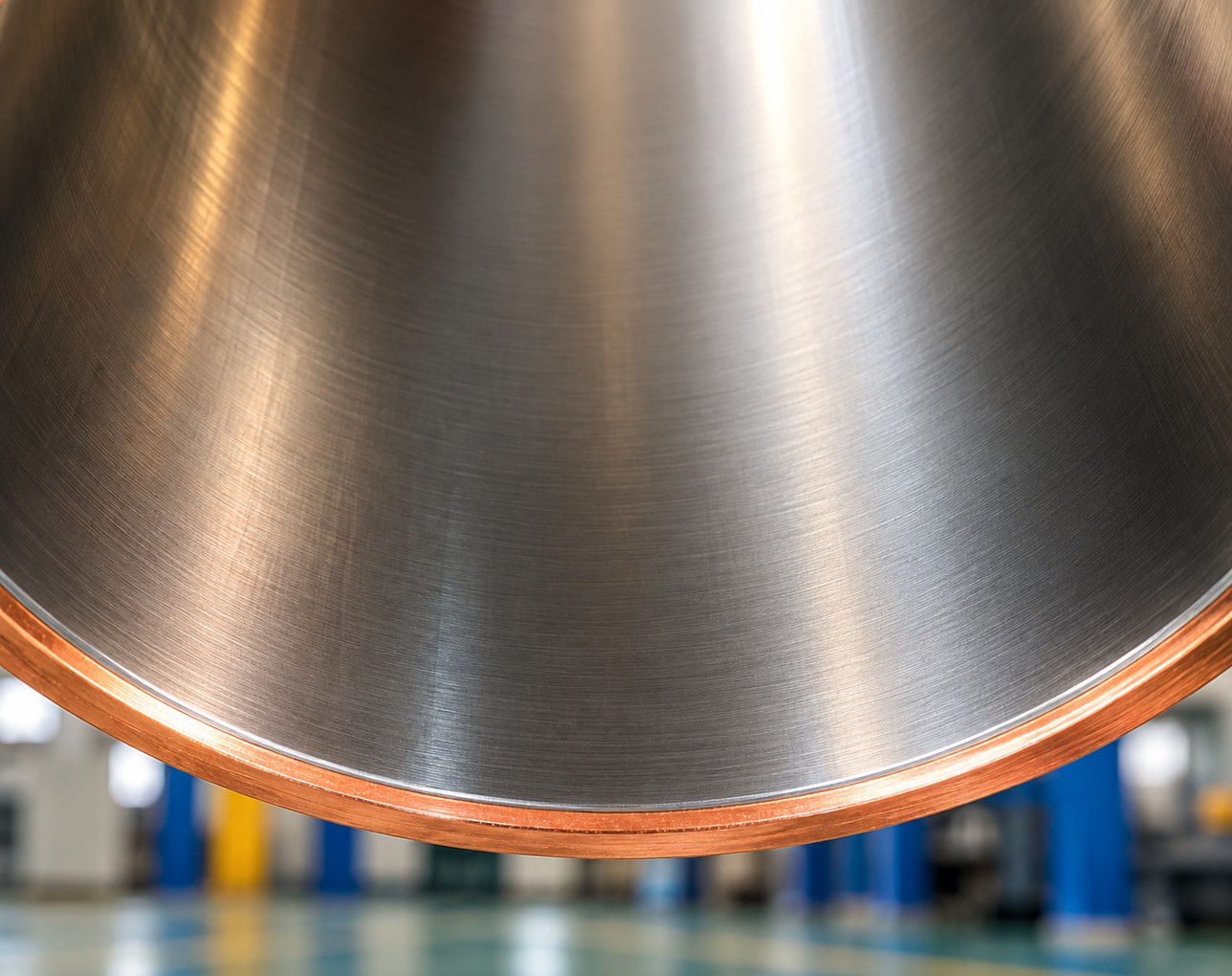
Copper Mould Tube Wall Thickness: 8 mm, 10 mm or 12 mm?
TechnicalPublished 3 October 20263 min read44 views
Wall thickness is the third number after section and length on a tube specification, and it is the one buyers most often leave blank. It matters: the wall is the path the heat takes from the steel to the cooling water, and it is also the only material available for re-machining a worn tube.
The chain of effects
Wall thickness → heat transfer → copper temperature → mechanical strength → taper stability → machining allowance → tube life. Every link pulls in a different direction:
Thinner wall (8 mm): faster heat extraction, lower hot-face temperature, thicker shell at the exit. But less stiffness, more distortion under the ferrostatic load, and almost no material for a second machining.
Thicker wall (12–15 mm): more stable geometry, higher resistance to bulging, room for one or two re-machining cycles. Slightly higher hot-face temperature, which matters on fast casters with Cu-DHP.
What determines the thickness
Billet size. Larger sections carry more ferrostatic pressure and need thicker walls: 100 × 100 tubes are often 8–10 mm, 150 × 150 and above 12 mm, bloom sections 15–20 mm.
Copper grade. CuCrZr is strong enough to run thinner than Cu-DHP at the same section.
Casting speed. Faster casting means more heat flux; a thinner wall keeps the copper cooler.
Cooling design. Tubes with machined water slots keep a thicker web between slot bottom and bore; plain tubes in an annular gap can be thinner overall.
Mould construction. The water jacket sets the outer dimension; the wall is whatever is left after the bore.
Taper design. Multi-taper and parabolic bores remove more material near the top; the wall is specified at the thinnest point.
Re-machining requirements. Plants that re-machine and re-plate tubes want 2–3 mm of spare wall; plants that scrap tubes do not.
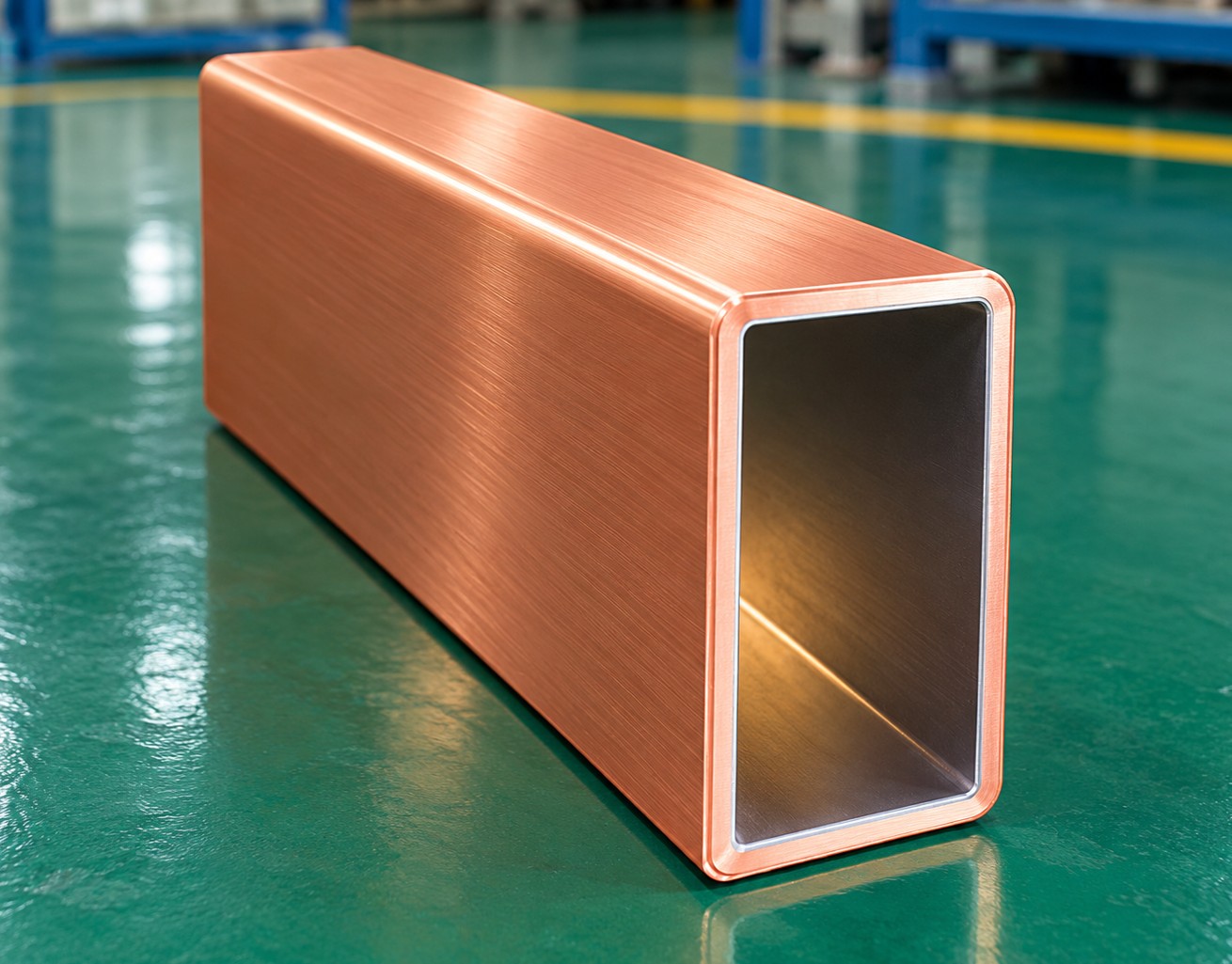
A 150 × 150 mm tube with 12 mm wall: enough stiffness for the section and enough copper for one re-machining.
Why 12 mm is the usual answer for billets
For 120–160 mm square billets at 2–3.5 m/min, 12 mm balances all of the above: the tube is stiff enough to hold taper for a full chrome life, the hot-face temperature stays in the safe range for CuAg, and there is material for one re-machining. That is why 12 mm is the default on our R4, R5 and R6 standard tubes. It is not a universal standard: published ranges from different suppliers run from 6 mm to 24 mm, and a 100 × 100 tube on a slow R5 caster may well be 10 mm.
What to do with your old tube
Measure the wall at the exit end at eight points with a micrometer. If it is uniform and matches the drawing, order the same. If it is thin on one face, the water gap is uneven and the jacket should be checked before the new tube goes in. If you want to move from Cu-DHP to CuAg or CuCrZr, keep the wall; the stronger copper is a bonus, not a reason to go thinner.
Frequently asked questions
Is a thicker wall always safer?
No. Beyond what stiffness requires, extra copper only raises the hot-face temperature and the price.
Can you make 8 mm walls on 130 × 130?
Yes, in CuCrZr for high-speed casters; we would not recommend it in Cu-DHP.
Do you measure wall thickness on every tube?
Yes, ultrasonically at eight points, and it is on the inspection report.
Not sure which option fits your caster? Send the caster model, casting speed and the marking on your current tube — our engineer will confirm the specification before quoting.Ask an engineer