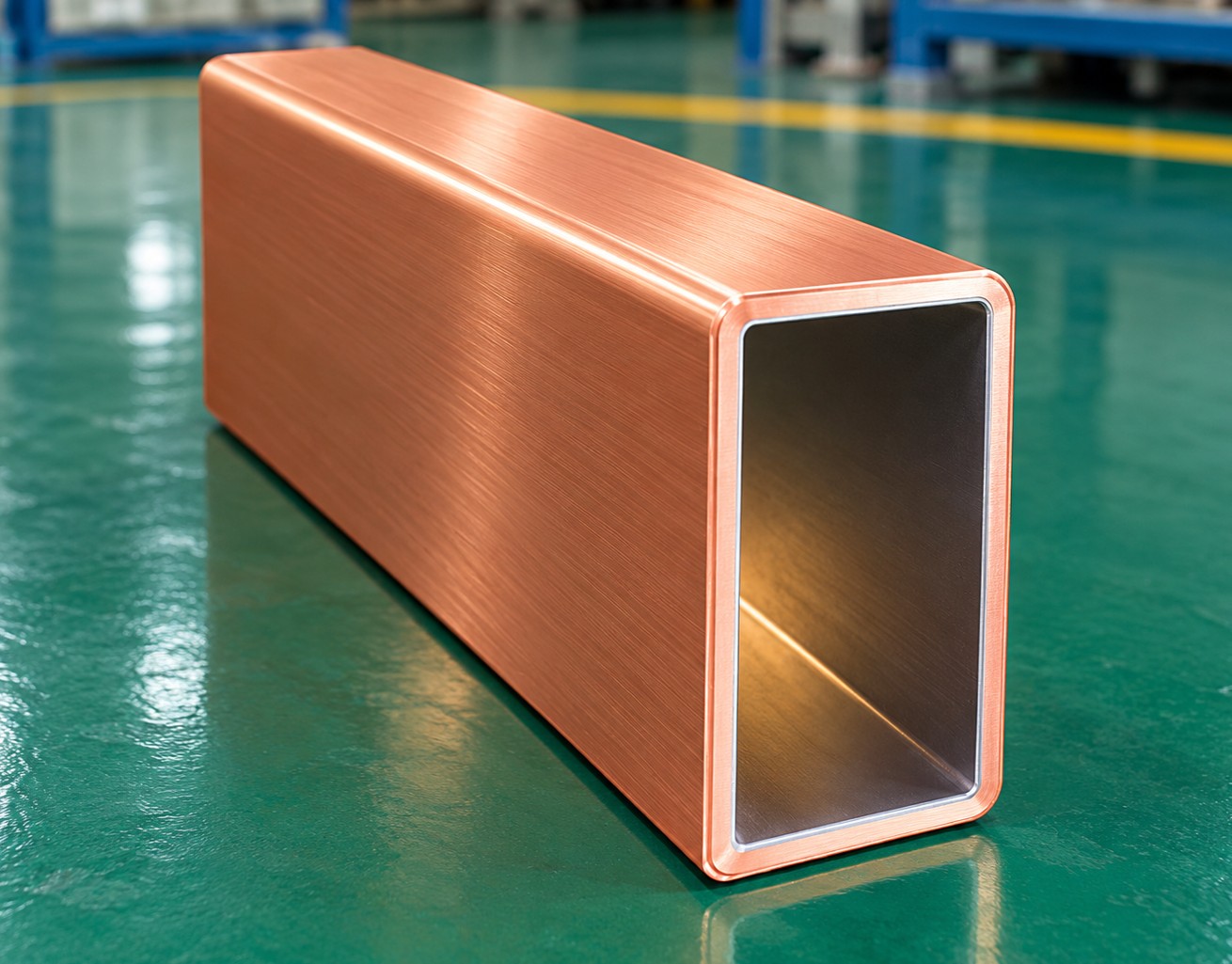

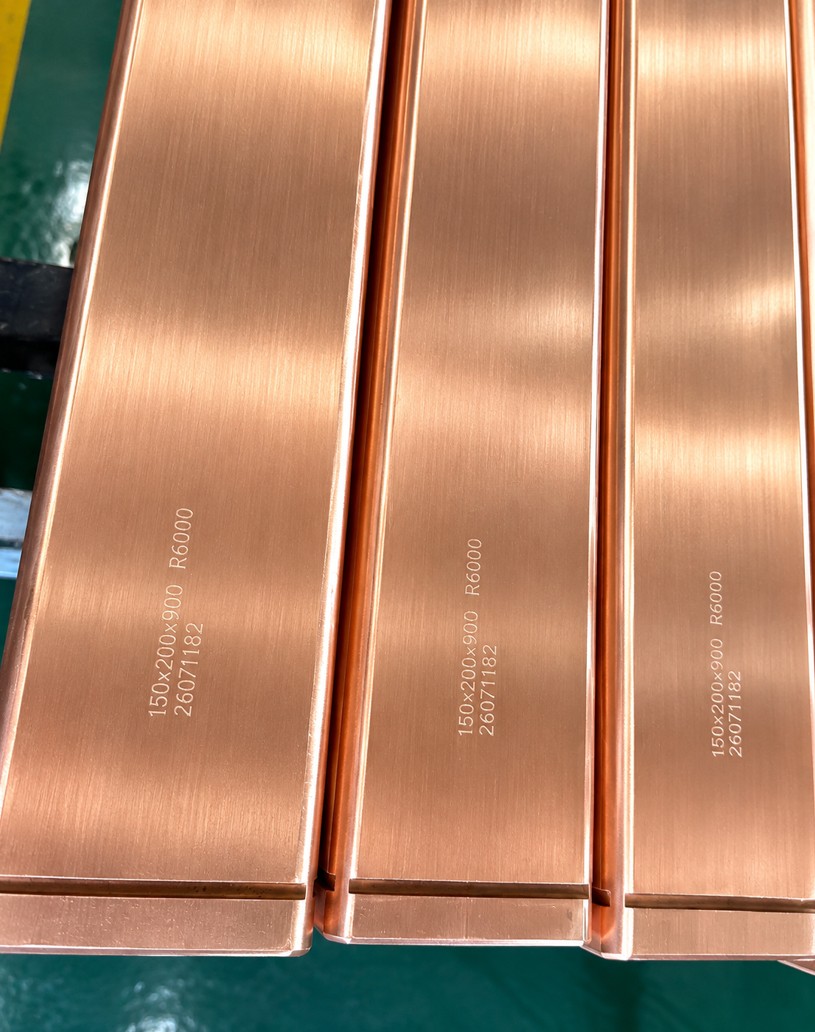
Buyers often ask which is "better", an R6 or an R9 copper mould tube. The question has no answer, because the R-number is not a quality grade. It is the radius of the continuous casting machine, in metres, and the tube is bent to that radius. The right tube is the one that matches your machine.
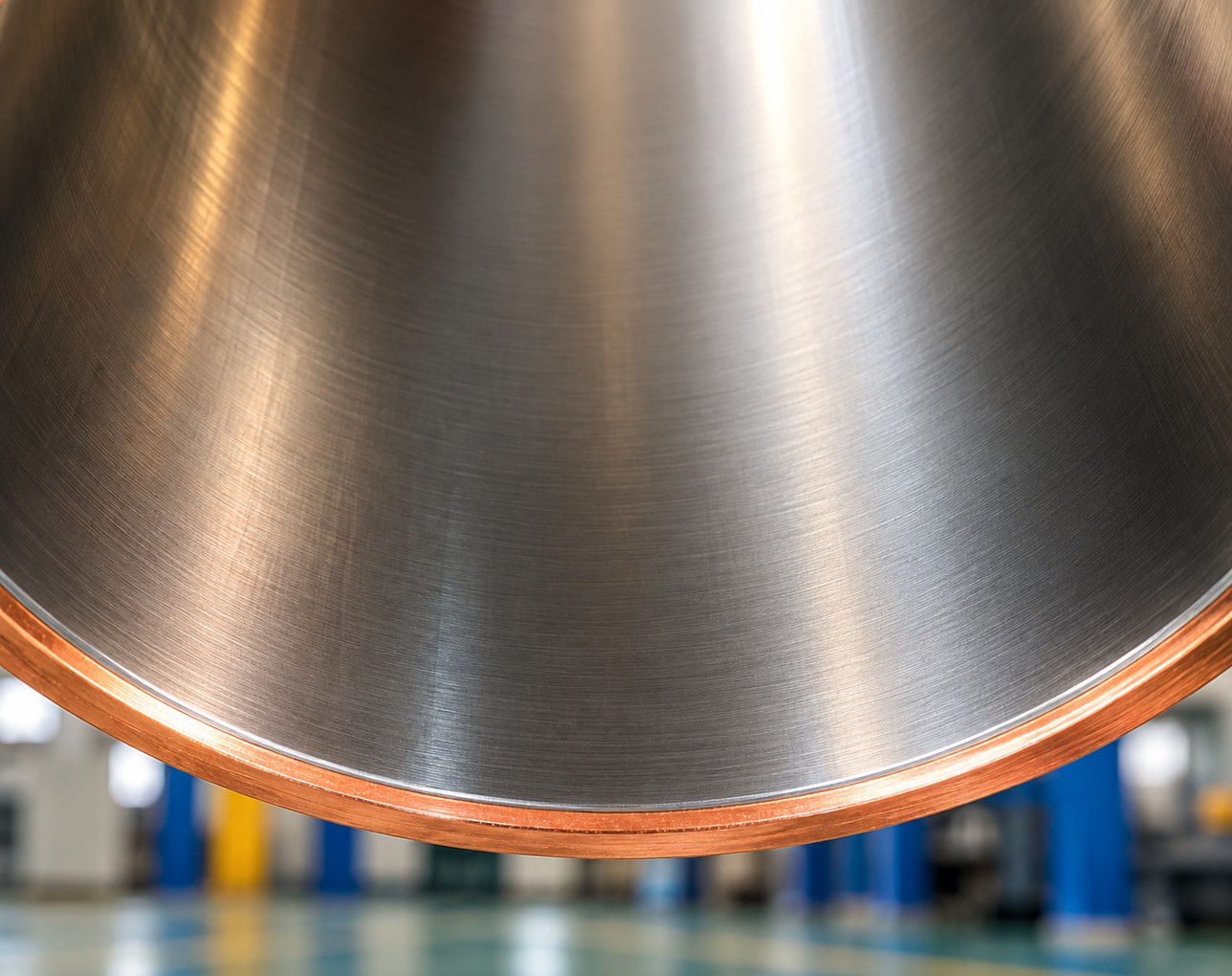
A curved billet caster guides the strand along an arc from the mould down to the straightening unit. The mould tube sits at the top of that arc, so its centreline is a segment of a circle with the machine radius:
Over a 900 mm tube the difference in curvature between R6 and R9 is about 34 mm of offset at the ends. Fitting an R6 tube into an R9 water jacket is physically impossible, and even a small radius error produces uneven shell contact and off-corner cracks.
| Radius | Typical sections | Typical length |
|---|---|---|
| R4000 | 100 × 100, 120 × 120, 130 × 130 mm | 700–900 mm |
| R5000 | 100 × 100, 110 × 110, 120 × 120 mm | 750–900 mm |
| R6000 | 100 × 100 to 160 × 160 mm, rectangular | 800–1000 mm |
| R9000 | 130 × 130 to 200 × 200 mm, bloom sections | 900–1000 mm |
These are the combinations we produce most; the full lists are in the specification tables. Smaller radius machines are cheaper to build but limit section size, because a large section on a tight radius cannot be straightened without cracking.
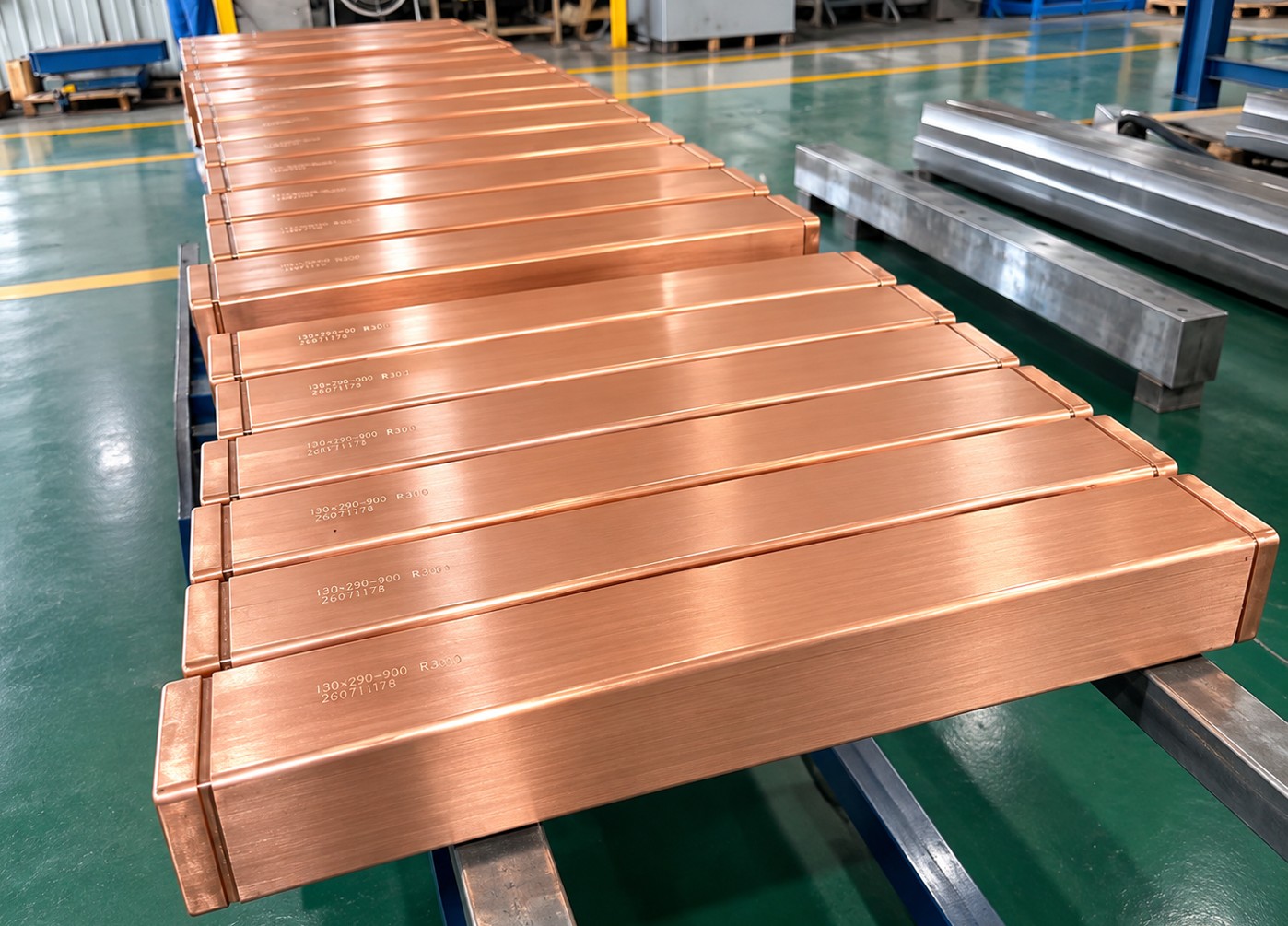
Only the curvature. Copper grade, wall thickness, plating and taper are chosen the same way for every radius. What does change is the machining set-up: the tube is machined straight, bent, then finish-machined on a curved fixture so the taper is measured along the arc. That is why a radius error cannot be corrected after plating.
No. The taper and bore are finish-machined in the curved state; re-bending destroys them.
Yes, vertical and vertical-bending casters use straight tubes; we make those too.
Product pages for R4, R5 and R6 with standard sizes, and R9 on request.
Related pages: R4 Copper Mould Tube · R5 Copper Mould Tube · R6 Copper Mould Tube · R9 Copper Mould Tube · Specification tables